
News: US EV Market Slowdown Impacts Rare Earth Magnet Demand
Views: 0 Author: Site Editor Publish Time: 2026-03-10 Origin: Site
In early 2026, the reality of the US electric vehicle market growth stands in stark contrast to earlier optimistic projections, sending an important warning signal to the dependent rare earth permanent magnet industry. U.S. EV sales fell more than 30% in the fourth quarter after the expiration of the federal tax credit, leading major automakers like General Motors, Ford, and Stellantis to significantly retreat from their previously aggressive electrification strategies. This structural change in market demand has fundamentally called into question the premise supporting plans to expand domestic rare earth permanent magnet (particularly NdFeB magnet) production capacity in the United States. Industry analysis pointedly states: if there is no mandated surge in EV production, there will be no surge in demand for rare earth permanent magnet motors. And if there is no surge in magnet motor production, then the demand for the critical heavy rare earths dysprosium and terbium collapses in tandem. These two elements are not decorative additives but are essential to allow neodymium-iron-boron magnets to operate at the high temperatures required by electric vehicle traction motors and large wind turbines. Consequently, the annual domestic U.S. demand for neodymium and praseodymium (light rare earths used in magnet production) has been reassessed, with total demand for magnet production serving both internal combustion accessory motors and EV traction motors likely aggregating around 15,000 tons per year. This suggests that even against the backdrop of announced U.S. plans to build roughly 40,000 tons per year of rare earth permanent magnet capacity, the underlying market demand appears relatively weak.
Facing the uncertainty in EV market demand, the global magnet industry is actively seeking alternative technological pathways to enhance supply chain resilience. This trend is fully reflected in the upcoming "Magnet Days 2026" event in Aalen, Germany, scheduled for March 3-5, 2026. The central themes of this conference are not about expanding rare earth mining, but focus on NdFeB optimization, heavy rare earth reduction, and recycling integration. The strategy championed by Germany and, by extension, Europe, is clearly pivoting towards overcoming supply vulnerability through technological innovation. The core idea is to out-engineer the problem through circular production and AI-driven materials science rather than compete directly with China on primary rare earth mining. Leading German institutions like TU Darmstadt and the Fraunhofer IWKS are spearheading this direction. Concurrently, in fundamental materials science, discoveries like a new generation of magnetic materials known as antiferromagnets and altermagnets could replace silicon-based technologies in the future, holding disruptive potential for the entire industry, including magnets.
This dual evolution of the market and technological landscape is profoundly reshaping the business logic of the magnet industry in 2026. On one hand, despite challenges on the demand side, structural tightness on the supply side and persistent cost pressures remain. Rare earth magnet material prices continue to surge in 2026, driven primarily by NdPr cost spikes, export controls, and sustained demand from EV and robotics sectors. On the other hand, shifts in the regulatory environment have become a new critical variable. New trade measures, including the 2026 Section 301 tariffs on permanent magnets, are expected to play a significant role in the industry's trajectory. Companies must therefore simultaneously navigate fluctuating downstream demand, upstream raw material price pressures, and adjustments in international trade policy. Future competition will increasingly depend on supply chain management capabilities, the pace of technological iteration, and market agility.
Flash News
-
 News: US Launches $12 Billion "VOLT" Project, Partners with Poland To Build New Rare Earth Magnet Supply Chain
In February 2026, the global rare earth magnet industry witnessed a major strategic move that could reshape the geopolitical supply chain landscape. The Trump administration officially launched the "VOLT" project on February 2, a $12 billion ambitious plan with the core objective of freeing the Unit
-
 News: US Department of Defense Invests $400 Million To Boost Domestic Rare Earth Magnet Production
In 2026, the strategic importance of the global rare earth magnet market continues to be prominent, with its supply chain security becoming a focus at the national level. Against this backdrop, the United States is taking a series of strong policy and investment measures to reduce external dependenc
-
 News: US EV Market Slowdown Impacts Rare Earth Magnet Demand
In early 2026, the reality of the US electric vehicle market growth stands in stark contrast to earlier optimistic projections, sending an important warning signal to the dependent rare earth permanent magnet industry. U.S. EV sales fell more than 30% in the fourth quarter after the expiration of th
- News: China's Leading Magnet Manufacturer Signs Key Patent Agreement To Alleviate Heavy Rare Earth Bottleneck
Recently, a key development in China's high-performance rare earth permanent magnet industry directly addresses a critical "chokepoint" in the supply chain. In February 2026, a major Chinese magnet material manufacturer signed a long-term supply agreement with a domestic upstream supplier concerning
- Latest News: AI Discovers New High-Temperature Permanent Magnet Materials, Potentially Shaking The Foundation of Rare Earth Magnet Demand for EVs
On February 19, 2026, a landmark research achievement was announced that could have a disruptive impact on the entire permanent magnet industry, particularly the electric vehicle sector which is most dependent on rare earth elements. Scientists at the University of New Hampshire have used artificial
- U.S. Trade Act Section 301 Tariffs Take Effect, Reshaping Cost Structure for Permanent Magnet Imports
According to the latest industry developments, a significant U.S. trade policy officially came into force on January 1, 2026. While market focus over the past year has largely been on the 2025 "Executive Tariffs," the tariff increases authorized under Section 301 of the Trade Act of 1974 have now be
- US Section 301 Tariffs Shake Global Magnet Supply Chain, Triggering Intensive Adjustments in Corporate Strategy And Market Dynamics
Recently, the magnet industry is facing a profound and impactful global supply chain shift directly driven by trade policy. Effective January 1, 2026, the long-planned U.S. "Section 301" tariffs have been activated, imposing an additional 25% duty on commercial permanent magnets (including samarium
-
 Latest News: US, Japan, and EU Collaborate to Reshape Rare Earth Supply Chain Amid China's Dominance, Triggering New Industry Variables
Recently, the global supply chain competition surrounding the critical strategic material of rare earth magnets has intensified sharply. In January 2026, the United States, Japan, and the European Union are accelerating coordinated actions in an attempt to build a "de-sinicized" rare earth and magne
-
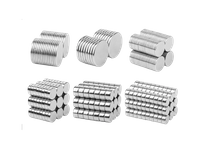 Latest Magnet Industry News: Global Major Economies Strengthen Rare Earth Magnet Supply Chain Strategies, Humanoid Robots Emerge as Key Demand Engine
According to industry information as of early December 2025, the magnet industry is at the intersection of two core trends: on one hand, the restructuring of the global supply chain is accelerating, driven by policies in multiple countries; on the other hand, emerging applications represented by hum
-
 EU Passes Critical Raw Materials Act Mandating Recycled Magnets in Wind Turbines And EVs
EU Passes Critical Raw Materials Act Mandating Recycled Magnets in Wind Turbines and EVsOn October 7, 2024, the European Parliament approved amendments to the Critical Raw Materials Act (CRMA), requiring a minimum 25% recycled magnet content in EU wind turbines and electric vehicle motors by 2030. T


